








Map the data
Which system owns each field. This sounds obvious and is the step most projects skip, which is why they fail later.
ERP Integration
Connect your store to the system that already runs your business — SAP, Dynamics, Navision, Sage or Salesforce — so stock, pricing and orders stop disagreeing, and Thai tax is handled properly.
Projects delivered
Happy clients
Years of experience
Sound familiar?
Any two of these
and the fix is almost never a new website. It's making the two systems agree.
What we build
We agree field by field what syncs, in which direction and how often — instead of the usual vague promise that the systems will 'talk to each other'.
Inventory pushed from the ERP or WMS to the storefront on a cadence that matches how fast you actually sell, so overselling stops.
Contract rates, tiered pricing and quantity breaks pulled from the ERP, so a wholesale buyer logs in and sees their own prices.
Web orders land in the ERP automatically with customer, tax and shipping data intact, then push shipment and tracking back to the store.
VAT handled correctly, tax invoice details captured at checkout, and the option of the Revenue Department's e-Tax Invoice & e-Receipt route.
Where no connector exists we build the integration layer — queued, logged and retried, so a failed sync surfaces instead of vanishing.
Worth knowing
Unlike several countries in the region, Thailand has not mandated B2B e-invoicing. The Revenue Department's e-Tax Invoice & e-Receipt system is voluntary — but the government has offered an enhanced tax deduction to encourage adoption, and that incentive has been extended to the end of 2027.
Smaller businesses can use a simplified email-based route rather than the full XML and digital-signature process. If you are integrating your store and ERP anyway, it is a sensible moment to decide whether to adopt it — the plumbing overlaps.
Rules and incentives here have been revised repeatedly, so confirm the current position with your accountant. We build the integration; we are not your tax adviser.
Built for Thailand
Thai VAT and full tax invoice fields — company name, tax ID, branch — captured and passed through correctly.
Structured to support the Revenue Department's e-Tax Invoice & e-Receipt route when you want it.
Kerry, Flash, J&T and Thailand Post, with tracking pushed back to the customer automatically.
Alongside the global ERPs, we connect the accounting packages Thai SMEs actually run.
How we do it
Which system owns each field. This sounds obvious and is the step most projects skip, which is why they fail later.
Per field: one-way or two-way, real time or batched. Not everything needs to be instant, and pretending it does gets expensive.
Direct API where the systems allow it, middleware where they don't — with queuing, retries and logging from the start.
Run both systems in parallel against real data and compare. Integration bugs hide in the edge cases, not the happy path.
Go live on a low-volume window, watch the queues, and keep the manual process available until the numbers agree.
Alerting on failed syncs and a dashboard someone actually checks. An integration nobody monitors is a future outage.
Selected work

Fresh Produce
Perishable stock, where a sync that lags by an hour sells produce the warehouse no longer has.
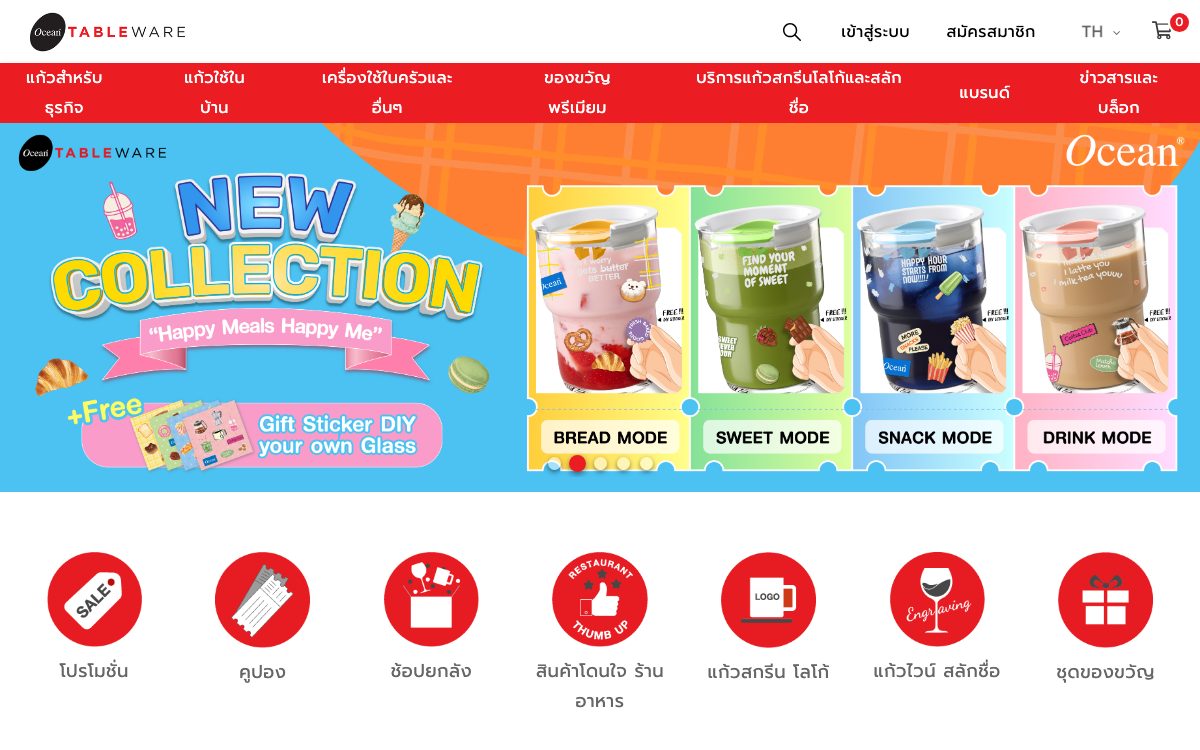
Glassware & Tableware
Deep catalogue with per-variant stock, priced and counted in the back office.
Wholesale
Wholesale ordering with account pricing that has to match the system the sales team quotes from.

Natural Products
Batch and expiry tracking carried through from the back office to what the customer can actually buy.
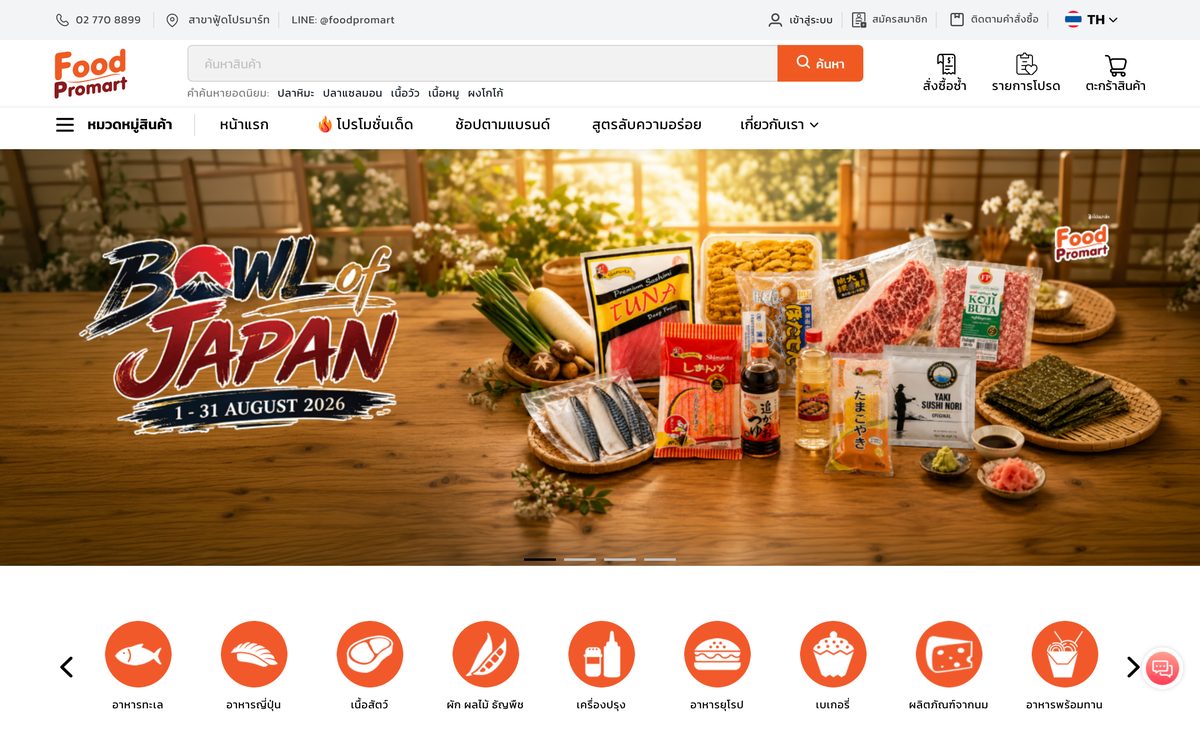
Premium Ingredients
Trade and retail pricing on one catalogue, reconciled against the back-office record.
ERP FAQ
SAP, Microsoft Dynamics, MS Navision, Sage and Salesforce most often, plus custom and in-house systems over REST or SOAP. If your system can expose an API or exchange files on a schedule, it can almost always be integrated — the question is what it costs, not whether it's possible.
No, and you usually shouldn't. Stock often needs to be near real time; product data and pricing are frequently fine on a scheduled batch. Making everything instant multiplies cost and fragility for no commercial gain, so we set the cadence per field against how fast that data actually changes.
It's the Revenue Department's electronic tax invoice and receipt framework. As of 2026 it is voluntary rather than mandatory — there's no general B2B e-invoicing mandate in Thailand. It is worth considering anyway: the government has offered an enhanced tax deduction for eligible e-Tax Invoice and e-Receipt spending, and that incentive has been extended to the end of 2027. Businesses under a revenue threshold can use a simplified email-based route rather than the full XML and digital-signature process. We'd suggest confirming the current details with your accountant, since the rules and incentives have been revised repeatedly.
A focused integration — stock and orders with one system — can be weeks. Multi-system syncs with customer-specific pricing and tax logic run longer, and the timeline is usually set by how quickly the other system's owner can answer questions and grant access, not by our development speed.
It gets queued, retried and logged, and someone gets alerted. The dangerous design is one that fails silently — you find out weeks later when stock is wrong. We build the failure path deliberately, because it's the part that runs on the worst day.
Usually we can integrate with what you have. We work with Magento, Shopify and WooCommerce, and we'll tell you honestly if the current build makes integration disproportionately expensive — sometimes fixing the foundation first is cheaper than working around it.
You own the code and the documentation. We can maintain and monitor it, but you are not locked in, and the next developer should be able to read what we built without calling us.
Tell us what you run and where the numbers disagree. We'll map the data with you before quoting anything.